

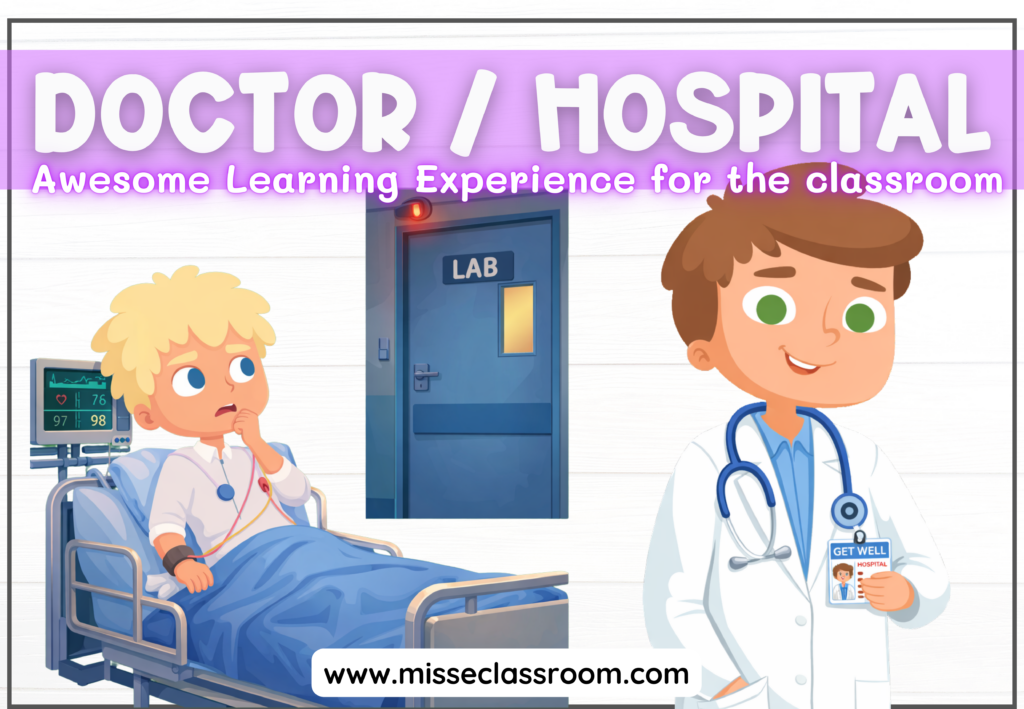
A Complete Hospital-Themed Unit for K–2 Classrooms (Low-Prep & Highly Engaging)
Every teacher knows the moment. A student walks into class with a bandage on their arm and suddenly everyone wants to talk about doctors, hospitals, and getting better. For young learners, the doctor and hospital theme is incredibly powerful because it connects directly to real life experiences. Children understand:
- getting sick
- visiting the doctor
- taking medicine
- seeing an ambulance
- helping people feel better
And when a theme connects to real life, language learning becomes meaningful. Instead of isolated vocabulary practice, students interact with words through games, storytelling, dramatic play, and problem-solving. This is exactly how I designed this Hospital & Doctor thematic unit for K–2 classrooms.
The goal is simple: create a complete sequence of activities that teachers can use across several days while keeping students engaged. Even better, most activities are low prep or no prep, which means teachers spend less time planning and more time teaching.
What Students Learn in a Hospital-Themed Unit
This type of unit naturally integrates several important literacy skills. Students practice:
- medical and health
- vocabulary
- symptoms and treatments
- reading and word recognition
- sentence building
- speaking and listening
- logical reasoning
By encountering vocabulary in multiple contexts: games, puzzles, role-play, and storytelling, students build much stronger retention.
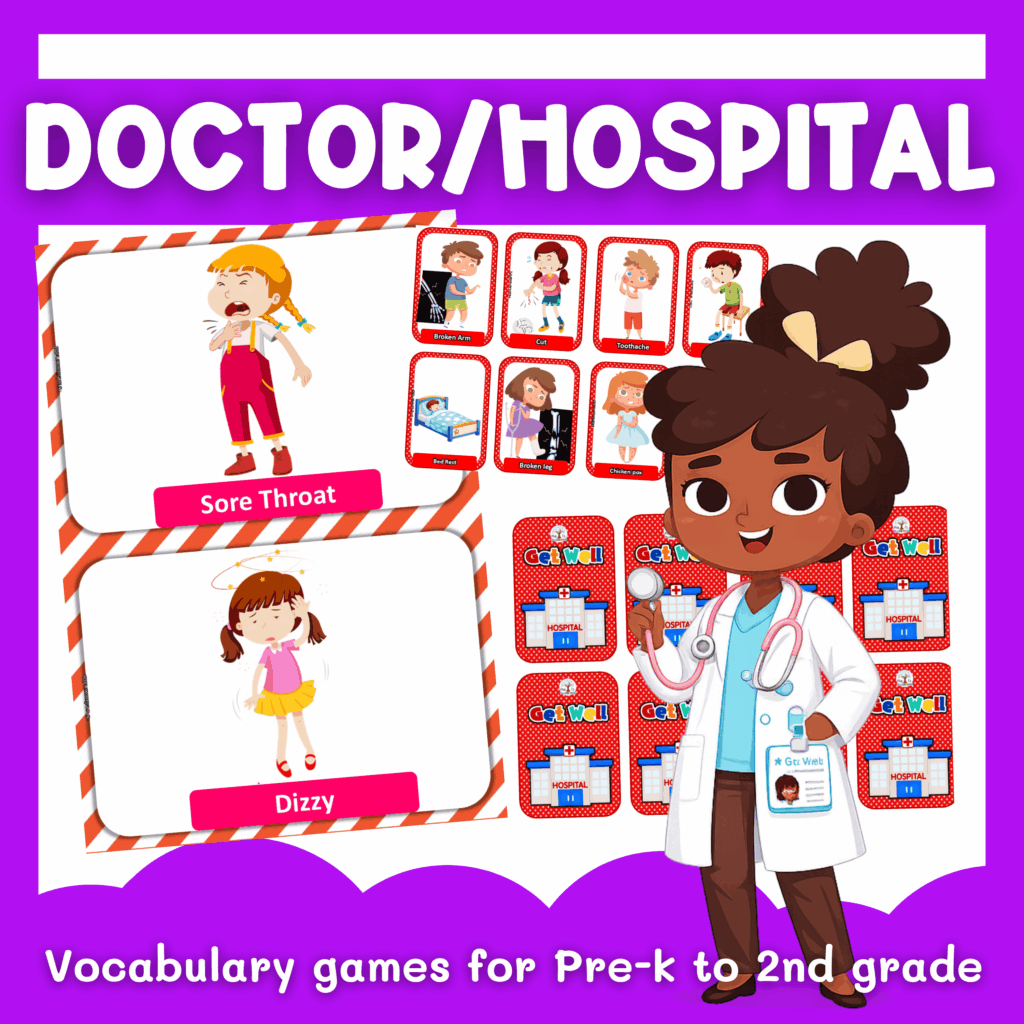
Building Vocabulary Confidence with Games
When I begin a hospital or doctor unit, I always start with something that feels very familiar to students. Most children already have some experience with being sick. They know what a cough feels like, they have had a fever, or they remember taking medicine at home. Because of that, illness vocabulary is the perfect entry point.
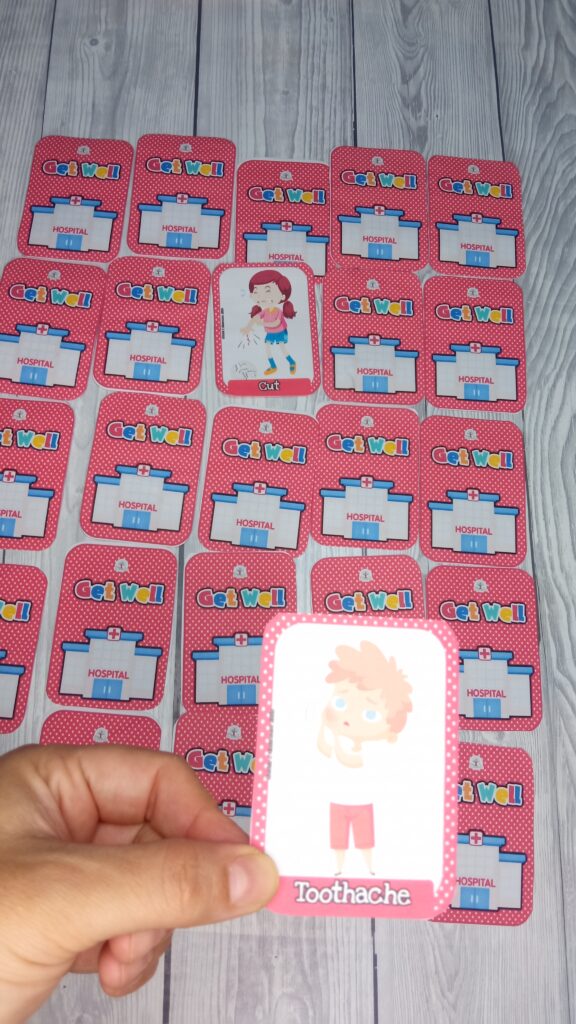
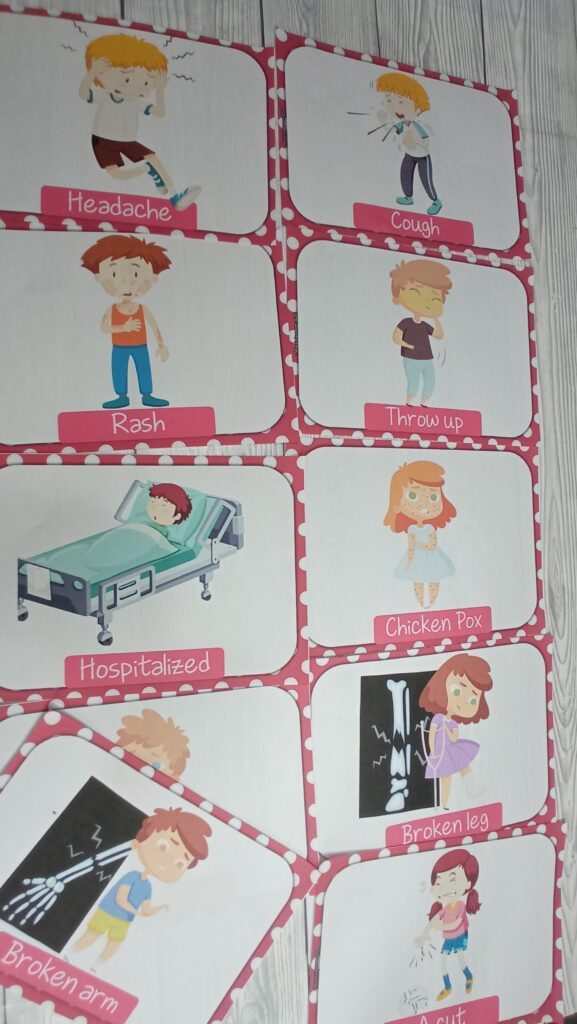
At the beginning of the unit, I like to introduce these words through simple literacy activities where students can see the vocabulary paired with images and gradually recognize the words. One way I often organize this is by setting up small literacy stations around the classroom. Students might rotate through a memory game, a word search, or a cut-and-paste activity where they identify different symptoms.
Students work with activities like:
- memory games /Go Fish vocabulary games
- word searches
- crossword puzzles
- Flashcards
- cut-and-paste activities
There is also a Genially interactive flashcard activity that allows teachers to introduce vocabulary digitally. Students practice:
- symptoms vocabulary
- word-picture recognition
- sentence building
- categorizing illnesses
- fine motor skills
Expanding the Conversation: How Doctors Help People Get Better
Once students feel comfortable talking about illnesses and symptoms, the next step is naturally asking: How do doctors help people get better?
This is where we introduce medical care vocabulary. Students begin learning words related to treatments and tools they might see in a hospital: bandages, gloves, capsules, wheelchairs, and other medical items. At this stage, I like to continue using literacy-style activities because students are already familiar with the format from the previous lessons.
Matching games, flashcards, and simple puzzles allow students to explore this new vocabulary while still feeling confident. I also like to pause and ask questions like:
«Have you ever worn a bandage?»
«Who has seen an ambulance before?»
Those questions always spark stories, and suddenly the vocabulary becomes connected to their own experiences.
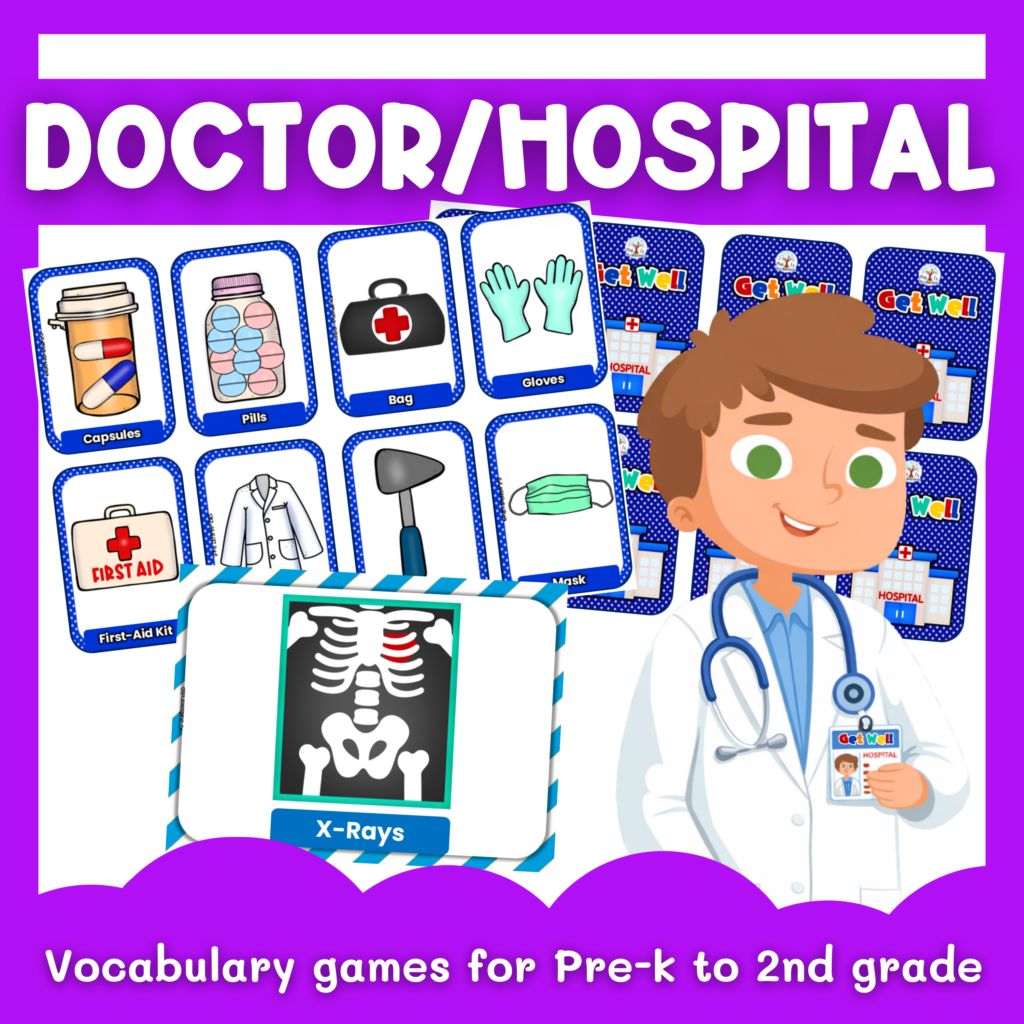
Students reinforce their learning through:
- memory card games
flashcards - word searches
- crossword puzzles
- sentence-building activities
This step helps students connect symptoms with treatments, which is an important conceptual link for young learners. Students develop:
- reading comprehension
- vocabulary recognition
- spelling skills
- context clues
- sentence construction
Bringing Everything Together Through Games
After students have explored illnesses and medical care vocabulary, they already recognize most of the words. This is when I like to introduce vocabulary games, because by this point students feel confident enough to play.
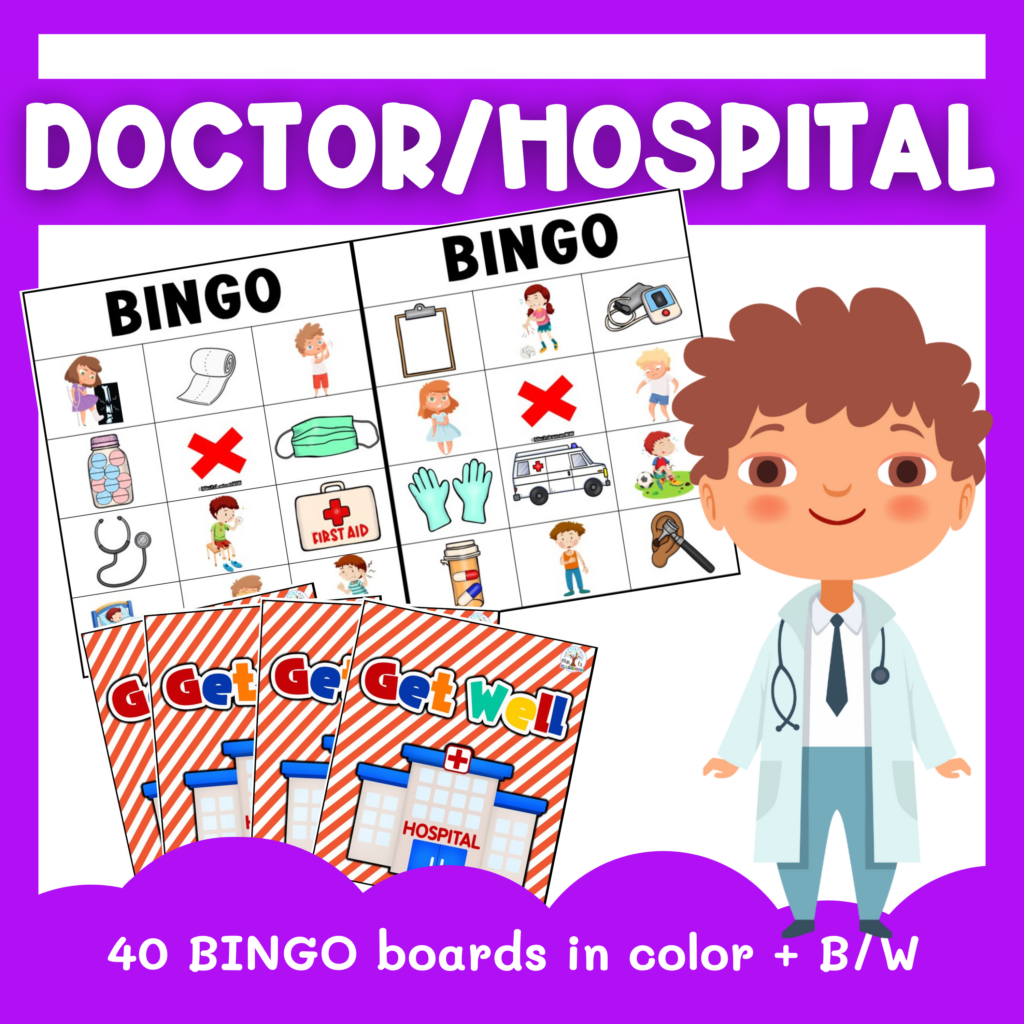
BINGO is especially powerful here because it naturally reviews all the vocabulary from the unit. Students listen, scan their boards, and quickly connect the images with the words they have already learned. I often let one student become the “doctor caller”, which makes the activity even more exciting.
The themed Sudoku puzzles are also a nice extension for students who enjoy problem solving, and the cootie catchers add a speaking element where students practice short exchanges like:
«What’s wrong?»
«I have a headache.»
At this stage of the unit, the vocabulary begins to feel very natural for students.
Letting Students Use the Language: Dramatic Play
After several days working with the vocabulary, students are usually ready for something more open-ended. That’s when I like to introduce dramatic play. Transforming a corner of the classroom into a small hospital instantly changes the energy of the room.
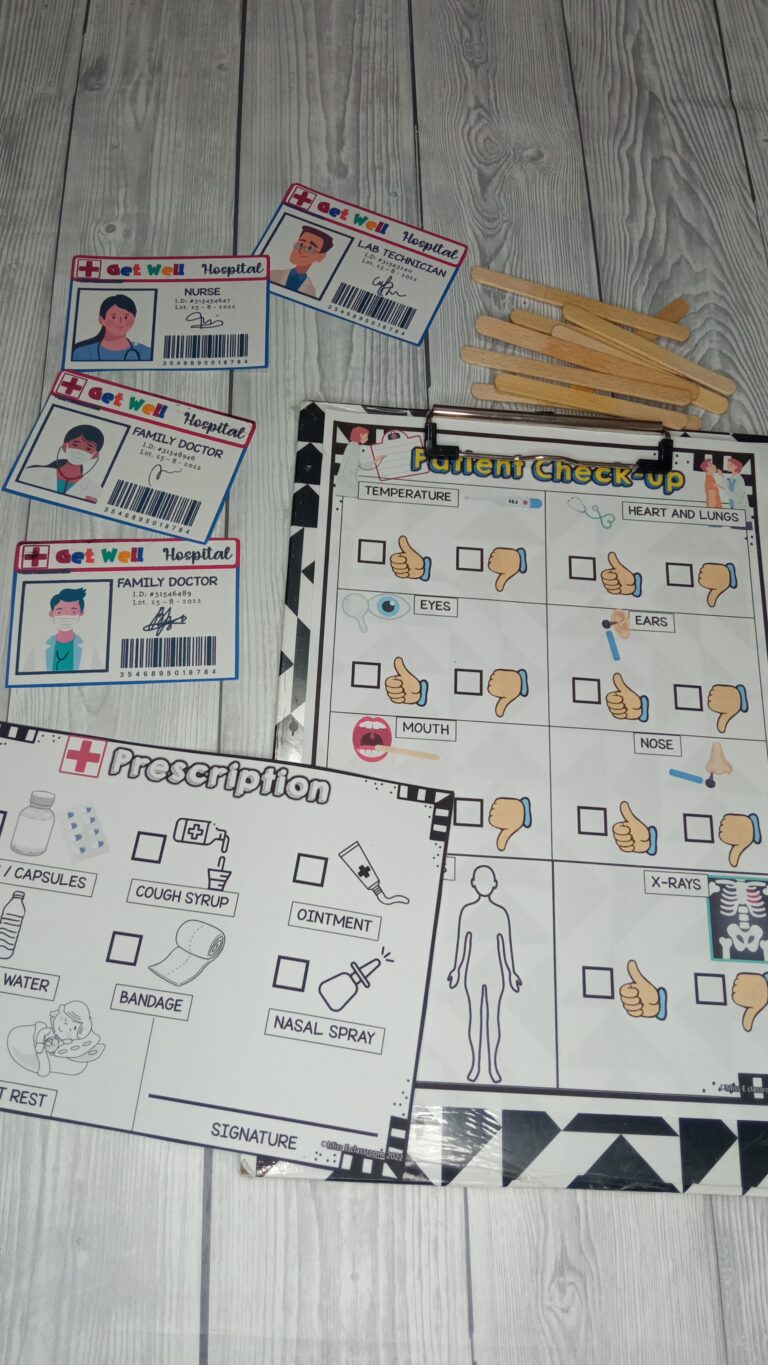
I add posters, patient forms, and simple props. Then students choose roles like doctor, nurse, receptionist, or patient. The amazing thing about dramatic play is that students begin using the vocabulary naturally, even if the sentences are simple. One student might say:
«You need medicine.» Another might ask: «What’s wrong?»
Those interactions show that the language has moved from recognition to communication.
What is included?
- Hospital banners.
- Welcome / open/close posters.
- Eye exam poster.
- 3 different X-rays poster.
- 9 different hospital areas’ posters.
- Body parts poster.
- Personnel I.Ds
- Labels
- Visiting the doctor DIALOG.
- Patient’s check-up form. (color + b/w)
- Prescription.
- Heartbeats monitor.
- Blood pressure monitor.
- Treatment form.
- Illnesses big poster.
- Doctor’s briefcase CRAFT.
- Hospital verbs’ poster.
Ending the Unit with a Collaborative Escape Challenge
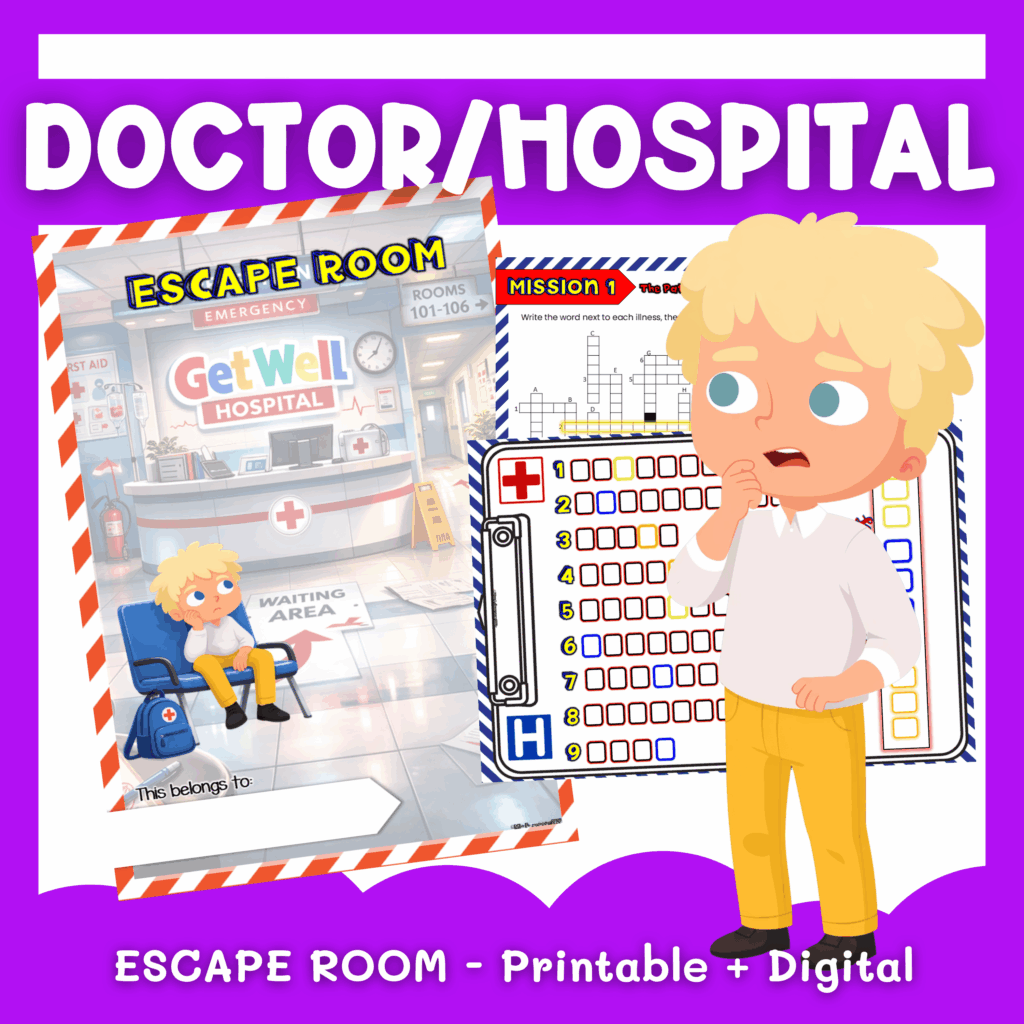
At the end of the unit, I like to finish with something that feels exciting and memorable. Instead of a traditional test, students complete a hospital escape room challenge. In the story, a child has accidentally entered a restricted hospital area and needs help escaping before the doctors return. Students work in teams solving different missions that involve vocabulary, sentence structure, decoding clues, and reading short messages. What I love about this activity is seeing how students bring together everything they have learned during the unit.
One student recognizes a vocabulary word. Another figures out part of the puzzle. Another writes the final answer. When the teams finally solve the last clue, the celebration is always genuine. It becomes both a review activity and an informal assessment of what students learned.
As you have seen, in this Doctor & Hospital unit, the activities move naturally, allowing students to revisit the language in multiple meaningful ways while staying engaged. The materials are visually consistent and flexible enough for centers, small groups, or whole-class instruction, so teachers can spend more time focusing on their students.
Every activity has been tested and refined through decades of real classroom teaching, and today these resources are being used successfully by thousands of educators, which gives teachers confidence that the activities truly work with young learners. If you are planning a Doctor & Hospital theme or a Community Helpers unit, choosing the bundle option is a simple way to organize the entire unit while saving money compared to purchasing each resource individually.
Happy Teaching!