
Inspired by Pirates of the Caribbean, the seed was planted.
How My Pirate Unit Actually Works in the Classroom🏴☠️
Every year, when I introduce pirates in upper elementary classes, something very consistent happens: students don’t just listen, they start asking. They want to know who pirates really were, how they lived, what they ate, how they navigated, whether the stories are true, and why we imagine them the way we do.
They question everything. They compare what they know from movies with what they read. They want details. That level of curiosity is what shaped this unit. This is not something I designed once and left unchanged; it has been built, tested, adjusted, and improved over years of teaching. Each part exists because students needed it at some point.
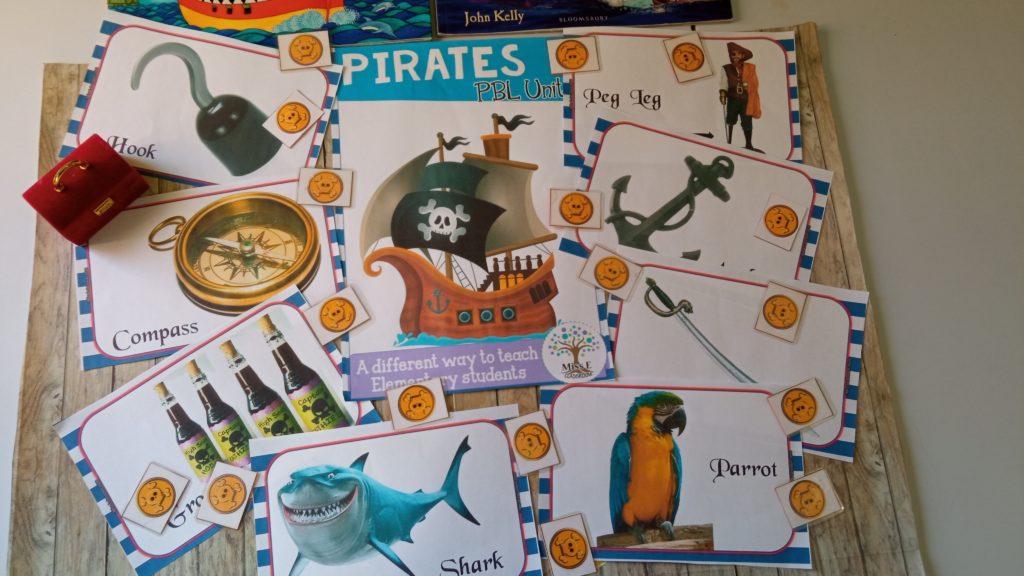
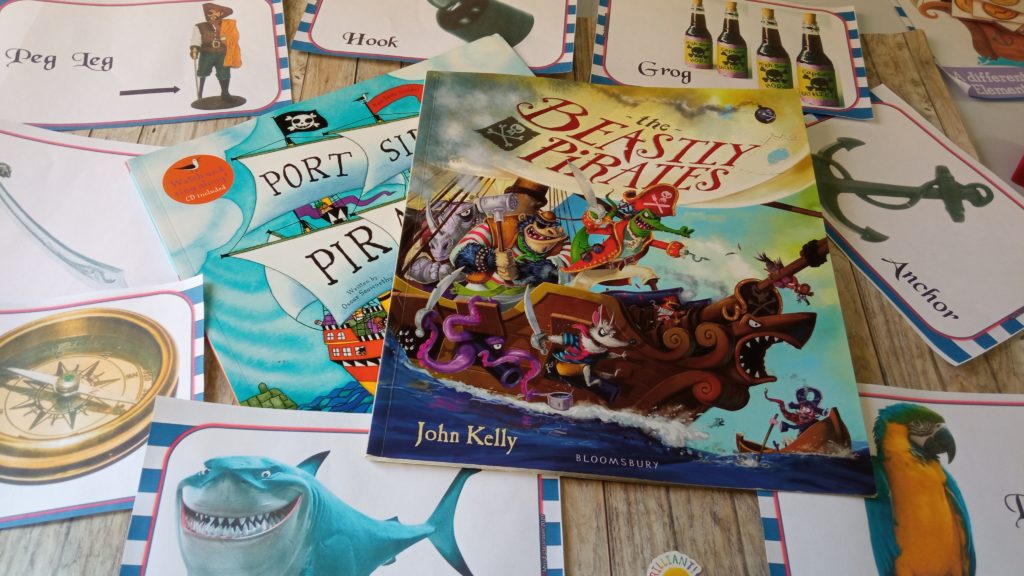
Step 1: Understanding Pirates
I always begin with structured reading.
Students need a clear foundation before doing anything else. We work through the content, build vocabulary, and, most importantly, question what we are reading.
By bringing history to life with this engaging and immersive Pirates lesson, this resource helps students explore the evolution of piracy from early sea raiders to the Golden Age, while developing reading comprehension, critical thinking, and writing skills. Students don’t just learn about pirates; they analyze, question, and apply their understanding through structured activities and interactive content.
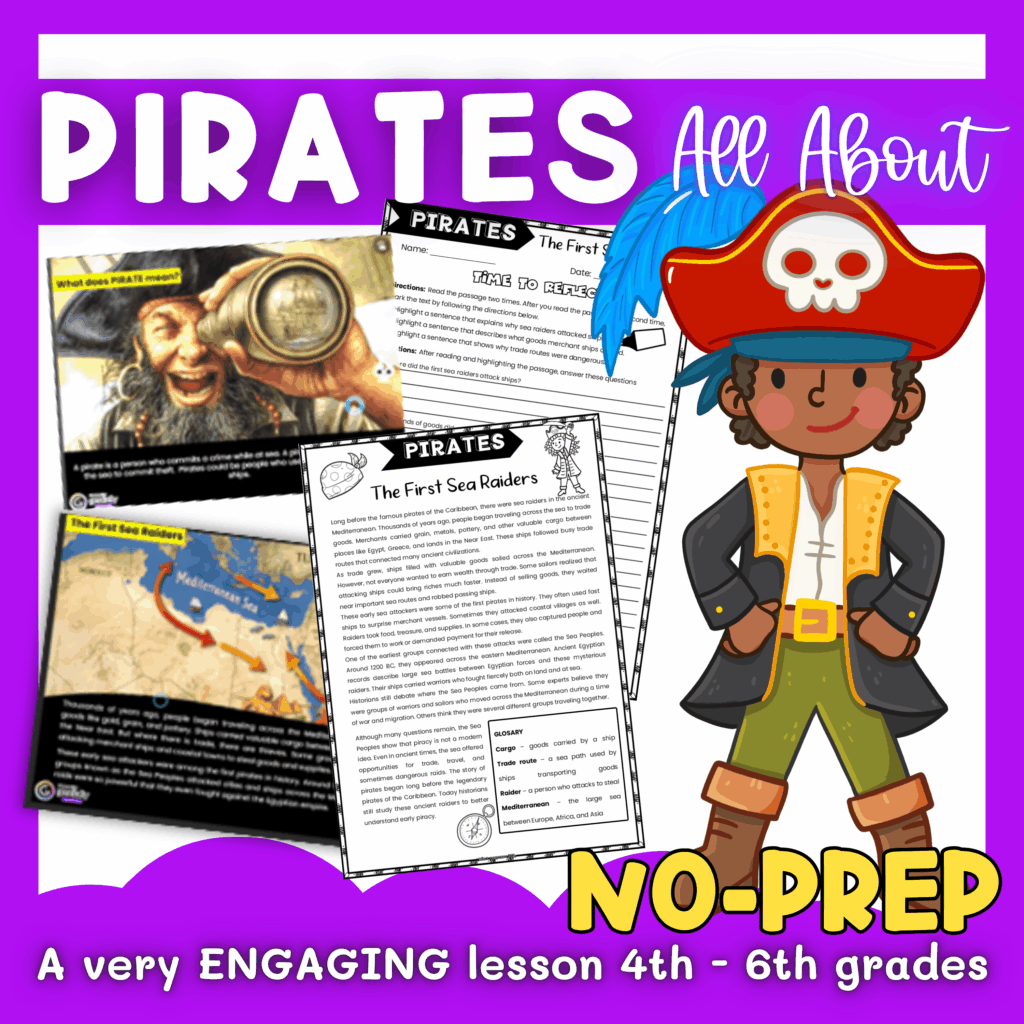
The focus here is not just understanding the text, but making sense of it. At this stage, students begin to notice the difference between myths and reality. That is where the first real engagement appears, and where the next step begins.
☠️What Makes This Resource Different?
This is not just a worksheet pack. This unit combines:
✔ Ready-to-use slides (printable + digital)
✔ Interactive Genially lesson with audio narration
✔ Reading passages with comprehension questions
✔ Myths vs Reality: Critical Thinking Activities
✔ Writing tasks (reflection, pirate language, conclusions)
✔ Hands-on craft (glossary accordion)
Step 2: Research Through the Lapbook
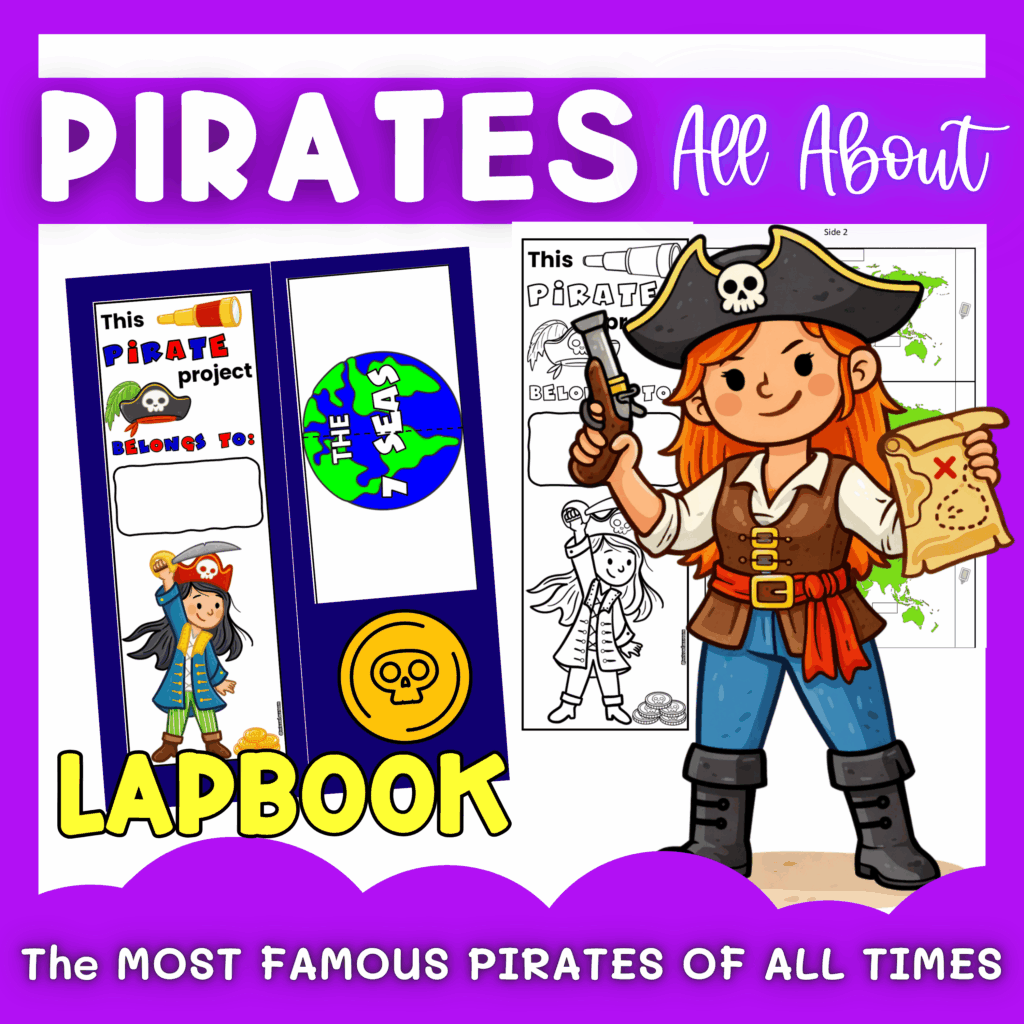
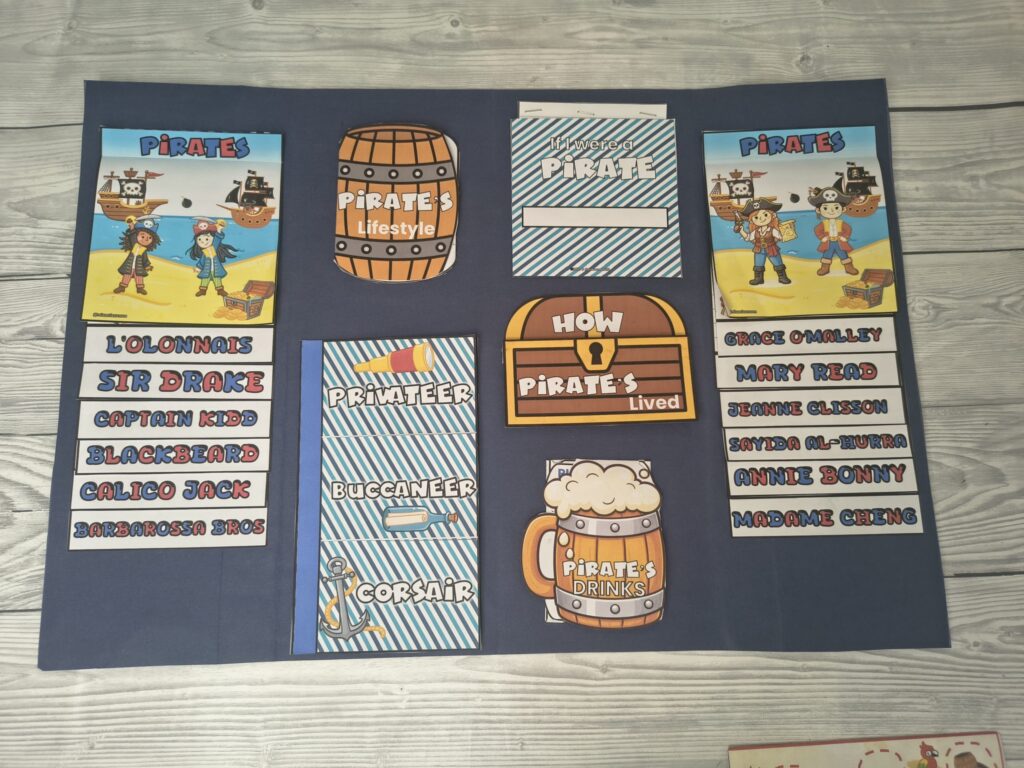
Once students have enough context, they want to go further. They want to know more about real pirates, their lives, and how everything worked. This is where the research lapbook comes in. By bringing pirate history to life, this engaging Pirate Research Lapbook has interactive, hands-on activities that help students explore the real world of pirates while developing key research, reading, and writing skills. It is Perfect for project-based learning.
This lapbook guides students through meaningful topics such as famous pirates (including Anne Bonny & Mary Read), types of pirates (privateers, buccaneers, corsairs), pirate lifestyle, and life at sea—all while encouraging independent thinking and creativity.
Students don’t just collect information. They learn how to organize it. They work with guided research, supported by curated links that I developed over time through trial and error. Everything they need is there, but they still need to think and make decisions. The physical process of cutting, assembling, and building the lapbook completely changes the level of engagement. They are not just completing a task. They are constructing something meaningful.
🎁 It also includes:
✔️ PowerPoint on Famous Pirates
✔️ Genially interactive resource
Step 3: Building a Portfolio
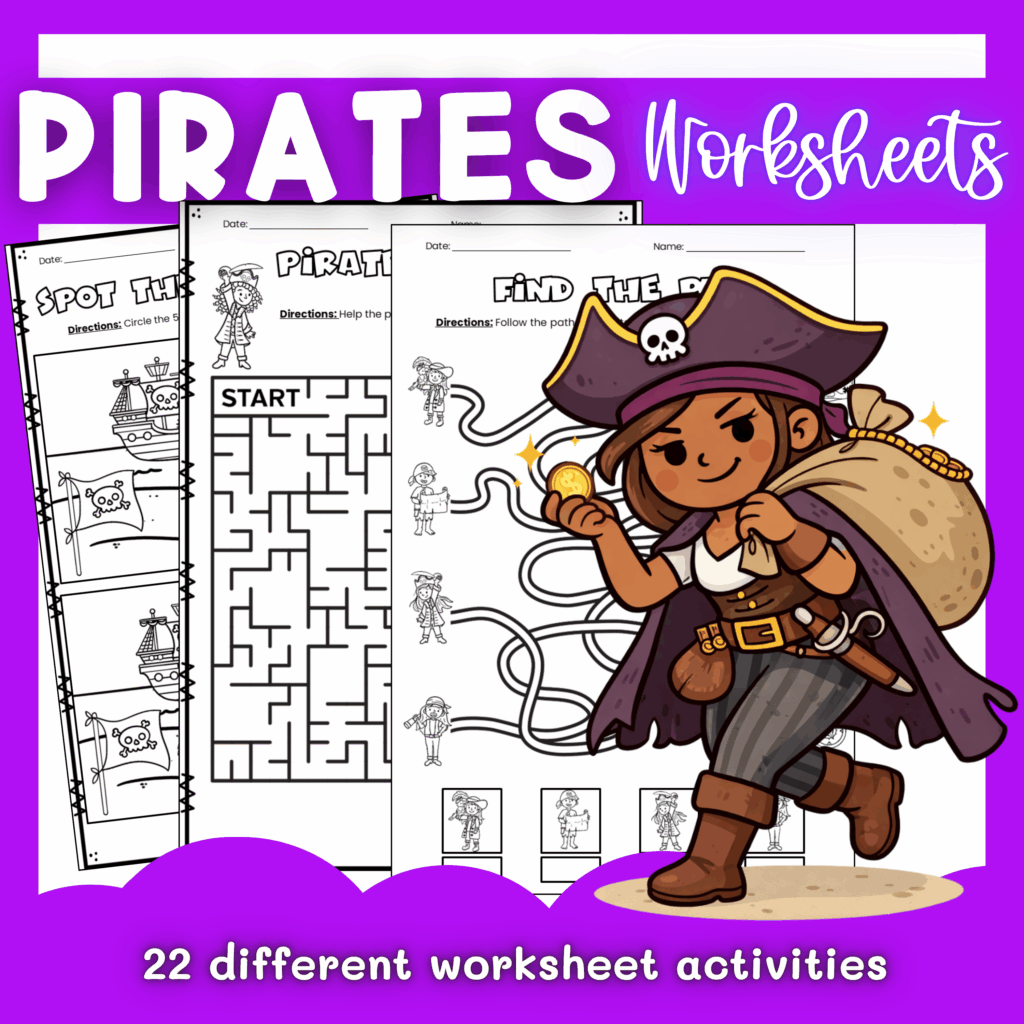
At the same time, I decided to make every Friday a game day and introduced a set of structured activities that run in parallel. These are not random worksheets. They are used intentionally to reinforce vocabulary, reading, and thinking. Throughout the unit, students complete these tasks and keep them organized.
I wanted to transform the Pirate unit into an engaging, ready-to-use experience with this comprehensive activities pack. This specific resource was designed for meaningful, structured extra activities. This pack combines writing, vocabulary, reading comprehension, and interactive activities to keep students engaged while reinforcing key skills.
⭐ What makes this resource different?
✔ Designed as a support pack
✔ Flexible use: whole group, centers, or independent work
✔ Mix of fun + academic rigor (not just worksheets)
✔ Easy to organize and adapt to your classroom needs
By the end, they have a portfolio that shows what they have learned.
This is important because with a portfolio, students see their own progress in a clear and tangible way.
Step 4: Writing Their Own Pirate Stories
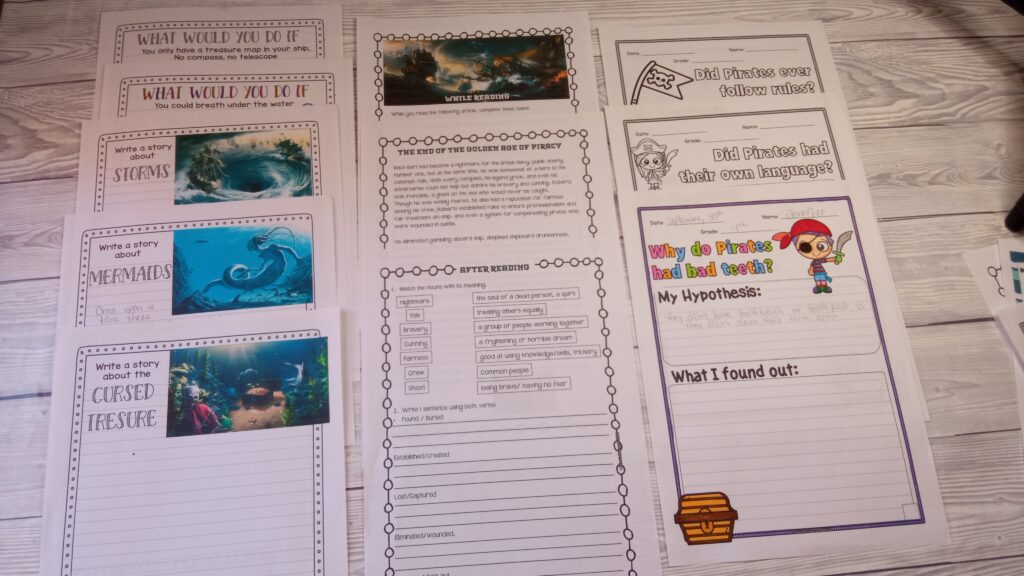
At a certain point, something shifts. My students stop asking only about real pirates and start imagining themselves as pirates. They want to create their own stories. The problem is that their writing is not ready yet for that level of creativity.
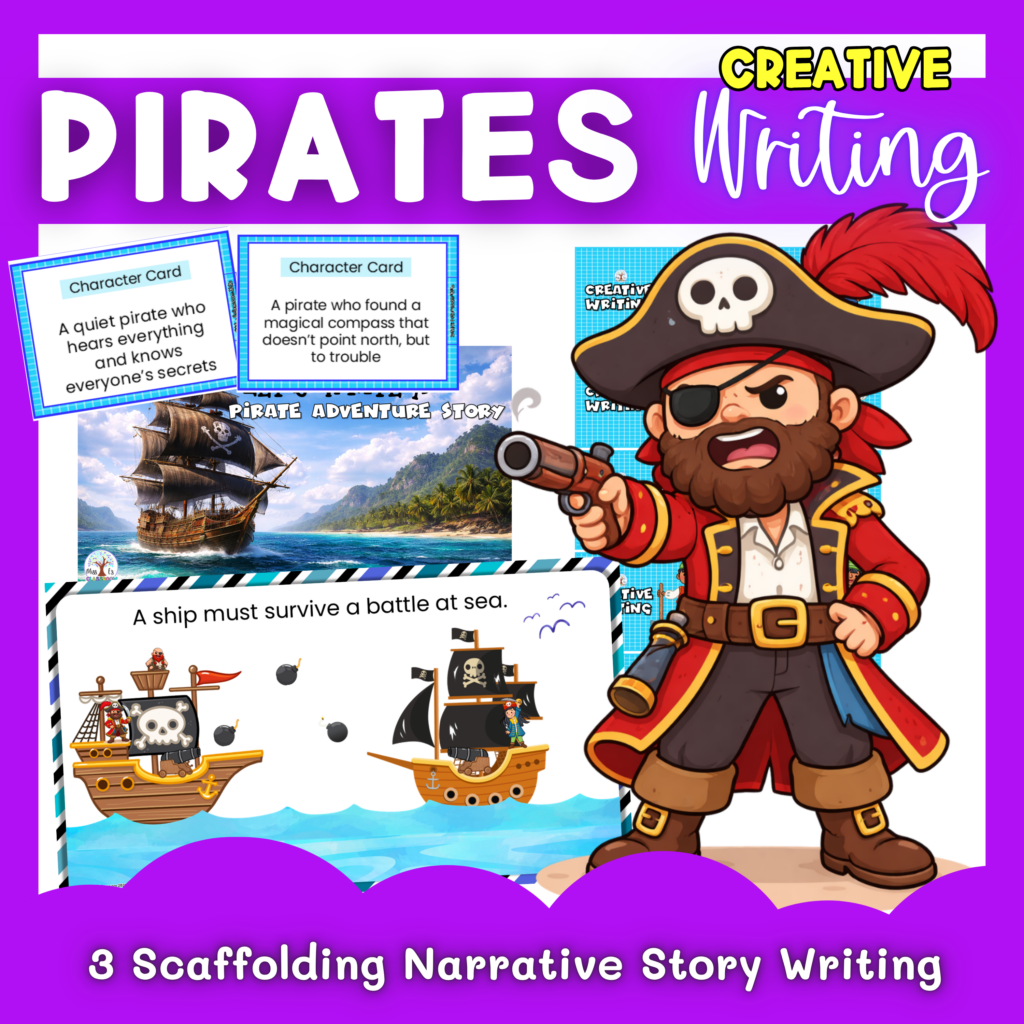
So instead of asking them to “write a story,” I guide them through structure. We work with story elements, organize ideas step by step, and gradually build more complex sentences. They learn how to expand their ideas and connect them properly. This is where their writing improves. Creative Writing Activities help students organize ideas, build stories, and write complete narratives with clear structure, using engaging pirate-themed prompts.
The idea is that they gain a clear structure to follow while still allowing them to be creative. Instead of guessing what to do, they learn how to build a story step by step, from generating ideas to writing complete, engaging narratives. This resource is designed to take students through a natural progression: from visual support and guided writing to more independent and complex storytelling.
Along the way, students develop confidence, improve organization, and begin using stronger, more varied sentences.
What students will learn:
- How to structure a story (beginning, middle, end)
- how to use story elements (character, setting, problem, twist, ending)
- How to expand ideas and write more detailed narratives
- How to use compound and complex sentences naturally
By the end, each student creates their own pirate character and develops a complete story.
Step 5: The Escape Room (Final Assessment)
To close the unit, we move into the final stage. The escape room.
Students are placed in a situation where they are captured aboard an enemy ship. Their goal is to escape by completing a series of missions. Each mission requires them to read carefully, identify something that does not make sense, solve a puzzle, and apply what they have learned to move forward. This is not a game added at the end. This is where everything comes together. They use their reading skills, their reasoning, their vocabulary, and their ability to work through problems.
WHY THIS ESCAPE ROOM IS DIFFERENT:
✔ Reading Comes First — Not Just Puzzles
Students don’t guess their way through. Every mission starts with a reading passage where they must detect an error before solving the puzzle. This makes comprehension meaningful and purposeful.
✔ True Story-Driven Escape Experience
This is not a collection of random tasks. Each mission follows a logical sequence and builds into a complete pirate narrative, keeping students fully engaged from start to finish.
✔ Puzzle + Thinking + Language Combined
Every challenge blends decoding, reasoning, and literacy skills. Students must think, read, and connect ideas to progress.
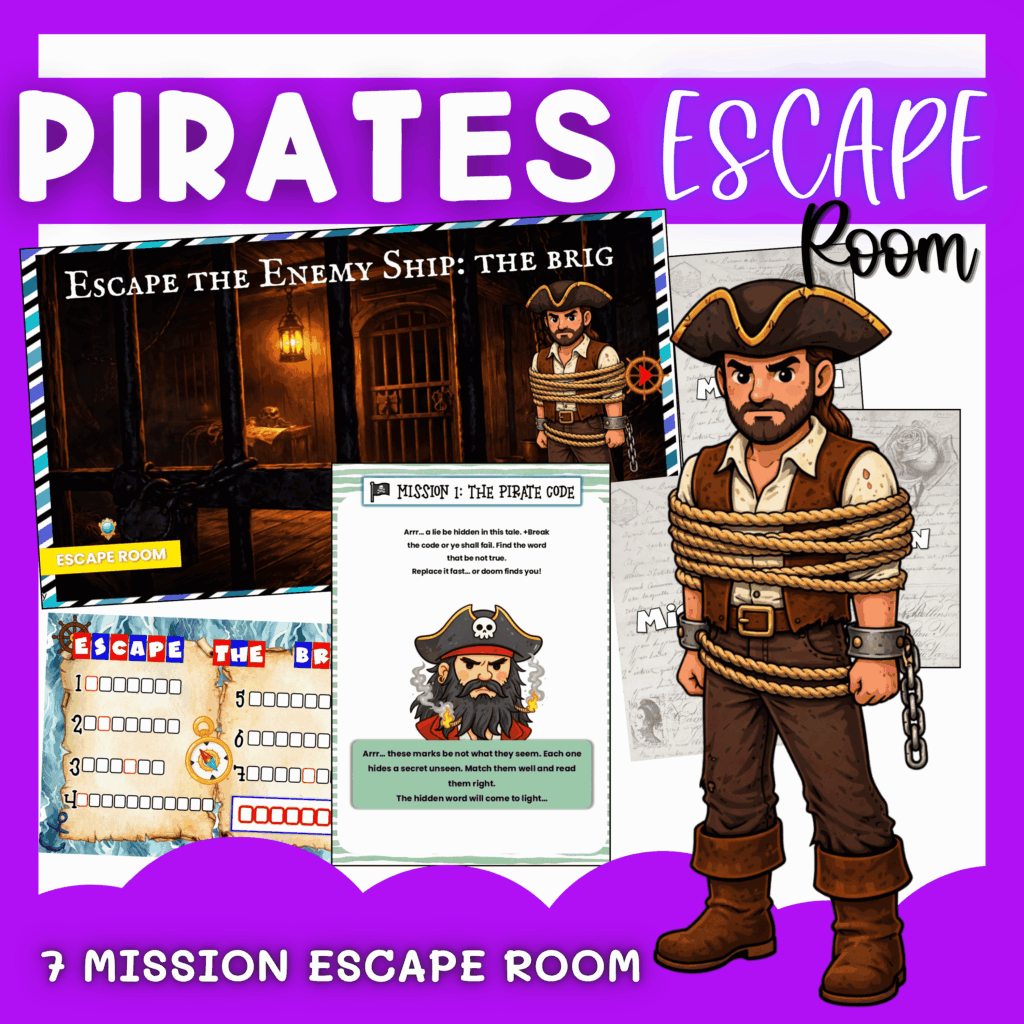
✔ Interactive Genially Version Included
Students can enter codes to unlock each mission, with full audio narration for immersion and optional audio support for passages.
✔ Flexible for Classroom or Digital Use
Works perfectly for small groups, whole-class play, or independent work—both printable and interactive formats included.
✔ Designed for Upper Elementary (Grade 5 Focus)
Not too easy, not overwhelming—just the right level of challenge for meaningful engagement.
✔ Complements Your Pirate Unit
Use it as a stand-alone activity or integrate it with your existing pirate lessons for a complete learning experience.
At the end of our Proyect based unit (PBL) for upper elementary, they:
- created scripts for a play (group work),
- rehearsed a lot
- designed their own scenery & finger puppets
- Presented the play to Kindergarteners & 1rst graders – we filmed them.
All my resources are NO PREP, so you just have to adapt it to your students’ needs & you’ll see how at the end it is all worthy!!!
I hope these ideas had inspired you! – Love
Elda